Engineering
Aeronautical Engineering: The Science Behind Aircraft Design, Flight, and Aviation #part1
Aeronautical Engineering Explained: Aircraft, Flight & Careers

Aeronautical Engineering: The Science Behind Aircraft Design, Flight, and Aviation
Part 1 — Foundations of Aeronautical Engineering
Introduction
From the first successful powered flight of the Wright brothers in 1903 to today's ultra-efficient passenger aircraft, stealth fighter jets, and autonomous drones, aviation has transformed how humanity travels, connects, and explores the skies.
Every aircraft that takes off represents years of scientific research, engineering innovation, and rigorous testing. Behind its graceful flight lies a careful balance of physics, mathematics, materials science, and computer engineering.
This fascinating field is known as Aeronautical Engineering.
Aeronautical engineers don't simply build airplanes. They design wings that generate lift, develop powerful yet efficient engines, create lightweight structures capable of withstanding enormous forces, and ensure aircraft remain safe in some of the harshest operating conditions imaginable.
If you've ever looked up at a jet crossing the sky and wondered how something weighing hundreds of tons can fly, you're asking the same questions that inspire aeronautical engineers every day.
In this first part of our series, we'll explore what Aeronautical Engineering is, how it evolved, how it differs from Aerospace Engineering, the basic principles of flight, the four fundamental forces acting on an aircraft, the major types of aircraft, and the exciting career opportunities available in this field.
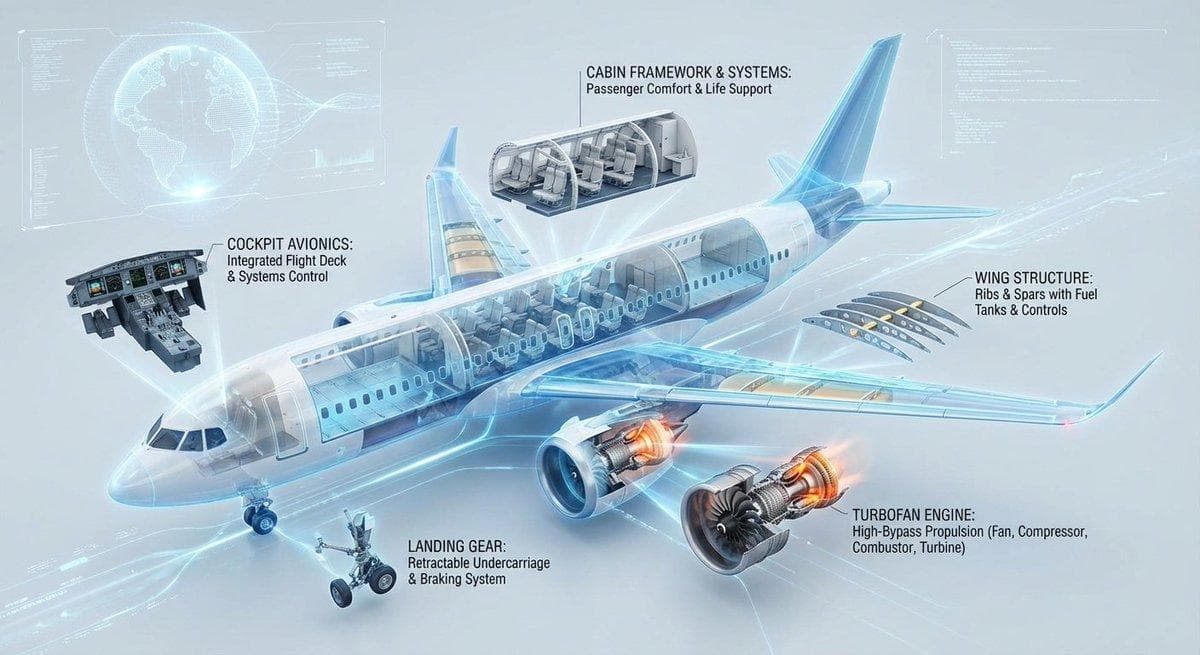
Figure 1. Aeronautical engineering combines physics, mathematics, materials science, and advanced design to create safe, efficient aircraft capable of flying through Earth's atmosphere.
Caption: From commercial airliners to military jets, every aircraft begins with engineering.
SEO Alt Text: Modern aircraft and aeronautical engineering design process illustrating aviation technology.
What Is Aeronautical Engineering?
Aeronautical Engineering is a specialized branch of Aerospace Engineering that focuses on the design, development, manufacturing, testing, and maintenance of aircraft operating within Earth's atmosphere.
Unlike astronautical engineering, which deals with spacecraft and satellites, aeronautical engineering is concerned with vehicles that rely on the atmosphere to generate lift and control flight.
These include:
- Commercial passenger airplanes
- Cargo aircraft
- Military fighter jets
- Helicopters
- Gliders
- Business jets
- Unmanned Aerial Vehicles (UAVs)
- Drones
Aeronautical engineers work to answer questions such as:
- How can an aircraft fly more efficiently?
- How can fuel consumption be reduced?
- How can passenger safety be improved?
- Which materials provide the best strength while remaining lightweight?
- How can aircraft produce less noise and fewer emissions?
Every improvement in modern aviation is the result of thousands of engineering decisions working together.
A Brief History of Aviation
Humanity dreamed of flight for centuries before it became reality.
Early Concepts
Artists and inventors such as Leonardo da Vinci sketched flying machines inspired by birds. Although these designs were never built successfully, they demonstrated that controlled flight was already a scientific curiosity centuries ago.
The Wright Brothers
In 1903, Orville and Wilbur Wright achieved the first sustained, powered, and controlled flight at Kitty Hawk, North Carolina.
Their aircraft remained airborne for only 12 seconds, yet it changed transportation forever.
Rapid Progress
During the following decades:
- Aircraft became larger and faster.
- Metal replaced wood in aircraft structures.
- Jet engines replaced piston engines on many aircraft.
- Radar and advanced navigation systems improved safety.
- Computers transformed aircraft control systems.
Today, modern airliners can travel more than 900 km/h while carrying hundreds of passengers across continents with remarkable efficiency.
Aerospace Engineering vs. Aeronautical Engineering
Many people use these terms interchangeably, but they are not identical.
| Aerospace Engineering | Aeronautical Engineering |
|---|---|
| Covers both aircraft and spacecraft | Focuses only on aircraft |
| Includes astronautical engineering | Operates within Earth's atmosphere |
| Studies rockets, satellites, and spacecraft | Studies airplanes, helicopters, drones, and jets |
| Includes orbital mechanics | Focuses on atmospheric flight |
| Broader engineering discipline | Specialized branch of aerospace engineering |
In simple terms:
Every aeronautical engineer is an aerospace engineer, but not every aerospace engineer is an aeronautical engineer.
The Four Fundamental Forces of Flight
For an aircraft to fly successfully, four forces must constantly interact with one another.
These forces determine whether the aircraft climbs, descends, accelerates, or remains in stable flight.
1. Lift
Lift is the upward force generated primarily by the aircraft's wings.
As air flows over and under the wing, pressure differences develop, creating an upward force that counteracts gravity.
Without sufficient lift, an aircraft cannot leave the ground.
2. Weight
Weight is the downward force caused by Earth's gravity.
Everything onboard—including passengers, cargo, fuel, and the aircraft itself—contributes to this force.
To take off, lift must exceed weight.
3. Thrust
Thrust moves the aircraft forward.
It is produced by engines, whether they are jet engines, turboprops, or piston engines.
Greater thrust allows the aircraft to accelerate and generate enough airflow over the wings to produce lift.
4. Drag
Drag is the aerodynamic resistance opposing forward motion.
It results from friction between the aircraft and the surrounding air.
Aeronautical engineers work continuously to reduce drag because lower drag means better fuel efficiency and higher performance.
Figure 2. The four fundamental forces of flight determine how every aircraft behaves in the atmosphere.
Caption: Lift opposes weight, while thrust overcomes drag to keep an aircraft moving forward.
SEO Alt Text: Diagram showing lift, weight, thrust, and drag acting on an aircraft during flight.
How Does an Airplane Stay in the Air?
At first glance, it seems impossible that an aircraft weighing hundreds of tonnes can remain airborne.
The answer lies in aerodynamics.
As the aircraft accelerates down the runway, increasing airflow passes over the specially shaped wings, known as airfoils.
The wing's geometry causes pressure differences above and below its surface, generating lift. At the same time, the engines produce thrust that pushes the aircraft forward, while engineers minimize drag through streamlined designs.
Once lift exceeds the aircraft's weight, the airplane leaves the ground and begins climbing.
This delicate balance is maintained throughout the flight, even as fuel is consumed and atmospheric conditions change.
Types of Aircraft Studied in Aeronautical Engineering
Aeronautical engineers work with many different aircraft, each designed for specific missions.
Commercial Airliners
Large passenger aircraft designed for safe and efficient long-distance travel.
Examples include wide-body and narrow-body airliners used by airlines around the world.
Military Aircraft
Designed for defense, reconnaissance, and combat operations.
These aircraft prioritize speed, maneuverability, and advanced avionics.
Cargo Aircraft
Built to transport heavy freight efficiently across continents.
Helicopters
Unlike airplanes, helicopters generate lift using rotating rotor blades, allowing vertical takeoff and landing.
Gliders
Aircraft that fly without engine power by exploiting naturally occurring air currents.
Drones and UAVs
Modern unmanned aerial vehicles are increasingly used in agriculture, mapping, surveillance, logistics, filmmaking, and emergency response.
Why Aeronautical Engineering Matters
Modern society depends on aviation far more than many people realize.
Aeronautical engineering contributes to:
- Global transportation
- International trade
- Disaster relief
- Medical emergency services
- Weather monitoring
- Scientific research
- National defense
- Environmental monitoring
Without continuous advances in aircraft design, global travel and commerce would be dramatically slower and less efficient.
Career Opportunities
Aeronautical engineering offers careers across research, design, manufacturing, testing, and operations.
Common roles include:
- Aircraft Design Engineer
- Aerodynamics Engineer
- Flight Test Engineer
- Aircraft Structures Engineer
- Propulsion Engineer
- Avionics Engineer
- Maintenance Engineer
- UAV Systems Engineer
- Aircraft Manufacturing Engineer
- Aviation Safety Engineer
Graduates may work for aircraft manufacturers, airlines, defense organizations, research laboratories, aviation authorities, or emerging aerospace startups.
Key Takeaways
- Aeronautical Engineering focuses on aircraft that operate within Earth's atmosphere.
- It is a specialized branch of Aerospace Engineering.
- Flight depends on the balance between lift, weight, thrust, and drag.
- Modern aircraft combine aerodynamics, materials science, propulsion, and advanced electronics.
- The field offers diverse career opportunities in commercial aviation, defense, research, and unmanned aircraft systems.
Write your article here...
About the Author
Aslam Hossain is the founder and editor of Vishtech Blog, creating accessible technology content about AI, software, startups, robotics, cybersecurity, and future innovations.
Comments
Article text preview: Aeronautical Engineering: The Science Behind Aircraft Design, Flight, and Aviation Part 1 — Foundations of Aeronautical Engineering Introduction From