Space Technology
Future Space Stations: The Next Frontier of Human Civilization in Orbit #part1
Explore future space stations, their technologies, scientific innovations, commercial potential, challenges, and role in humanity's future beyond Earth.

Featured Snippet Answer
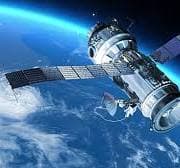
A future space station is an advanced orbital habitat designed to support long-term human life, scientific research, manufacturing, tourism, and deep-space exploration. Unlike today's stations, future space stations are expected to incorporate artificial intelligence, reusable spacecraft, advanced life-support systems, robotic automation, commercial facilities, and potentially artificial gravity, making them essential stepping stones toward permanent human presence beyond Earth.
Future Space Stations: Building Humanity's Next Home Beyond Earth
Imagine waking up to watch sixteen sunrises every day, conducting scientific experiments in a gravity-free laboratory, manufacturing materials impossible to create on Earth, and preparing for humanity's first permanent settlements on the Moon and Mars. This is not science fiction—it is the vision driving the development of future space stations.
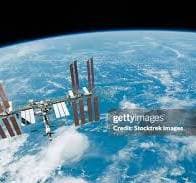
For more than half a century, space stations have represented humanity's most ambitious engineering achievements. From the modest Soviet Salyut stations of the 1970s to the remarkable International Space Station (ISS) orbiting approximately 400 kilometers above Earth today, these orbital laboratories have transformed our understanding of living and working in space.
Yet the coming decades promise something far more revolutionary.
The next generation of space stations will not merely serve as scientific laboratories. They are expected to become commercial hubs, manufacturing centers, tourist destinations, medical research facilities, and transportation gateways connecting Earth to the Moon, Mars, and potentially even deeper regions of our Solar System.
Powered by breakthroughs in artificial intelligence, robotics, reusable rockets, advanced materials, autonomous systems, biotechnology, and sustainable life-support technologies, future space stations may fundamentally reshape the global economy while opening an entirely new chapter in human civilization.
However, these ambitious visions also introduce significant engineering, economic, ethical, and environmental challenges. Building safe, sustainable, and economically viable orbital habitats requires overcoming problems that scientists and engineers are only beginning to solve.
This article explores the science, engineering, current research, emerging technologies, commercial opportunities, and future possibilities surrounding future space stations, while carefully distinguishing between established scientific facts, ongoing research, expert predictions, and speculative concepts.
Quick Summary
| Topic | Summary |
|---|---|
| Main Idea | Future space stations will become multi-purpose orbital habitats supporting science, commerce, tourism, and deep-space exploration. |
| Current Status | Multiple government agencies and private companies are actively designing next-generation stations. |
| Major Technologies | AI, robotics, reusable spacecraft, closed-loop life support, advanced materials, autonomous maintenance, and potentially artificial gravity. |
| Main Benefits | Scientific discovery, commercial manufacturing, tourism, deep-space missions, and international cooperation. |
| Biggest Challenges | High costs, radiation, sustainability, life support, orbital debris, and long-term human health. |
| Long-Term Vision | Permanent human infrastructure throughout Earth's orbit and beyond. |
Key Highlights
- Human space stations are entering a commercial era.
- Artificial intelligence will manage many onboard systems.
- Space manufacturing may become a trillion-dollar industry.
- Future stations will support Moon and Mars exploration.
- Advanced life-support systems aim to recycle nearly all essential resources.
- Artificial gravity remains one of the biggest engineering goals.
- Private companies are becoming major players alongside national space agencies.
- Future stations could dramatically reduce the cost of long-duration space missions.
Table of Contents
- Introduction
- History of Space Stations
- Evolution Toward Future Space Stations
- Scientific Background
- Why Humanity Needs Future Space Stations
- How Future Space Stations Will Work
- Core Technologies
- Artificial Intelligence in Space
- Robotics and Automation
- Artificial Gravity
- Life Support Systems
- Energy Systems
- Space Manufacturing
- Commercial Space Stations
- Medical Research
- Space Tourism
- Lunar and Mars Missions
- Challenges
- Risks
- Ethics
- Environmental Impact
- Economic Impact
- Latest Research
- Future Predictions
- FAQ
- Conclusion
The History of Space Stations
Understanding the future begins with understanding the remarkable journey that brought humanity into permanent orbit.
The Dawn of Orbital Living
The concept of a space station predates the Space Age itself. During the early twentieth century, visionary scientists imagined enormous rotating structures orbiting Earth, providing artificial gravity for future generations of astronauts.
Although these early ideas seemed impossible at the time, advances in rocketry after World War II gradually transformed imagination into engineering reality.
The launch of the first artificial satellites demonstrated that human-made objects could remain in orbit. Within a decade, scientists began designing habitats capable of supporting astronauts for extended periods.
The First Generation: Experimental Space Stations
The earliest space stations focused on answering a fundamental question:
Can humans survive and work effectively in space for weeks or months?
The Soviet Union pioneered this effort with a series of relatively small orbital laboratories.
These stations were designed primarily to investigate:
- Human physiology
- Life-support technologies
- Orbital mechanics
- Scientific experimentation
- Long-duration missions
Although primitive by modern standards, they established many of the operational principles still used today.
The Era of Modular Space Stations
As launch capabilities improved, engineers shifted from launching complete stations in a single rocket toward assembling larger structures in orbit.
This modular approach offered several important advantages:
- Easier upgrades
- Greater flexibility
- Expanded scientific capabilities
- Longer operational lifetimes
- International collaboration
Instead of replacing an entire station, individual modules could be added, repaired, or replaced.
This concept became the foundation for modern orbital infrastructure.
The International Space Station: A Global Achievement
The International Space Station (ISS), continuously inhabited since 2000, represents one of humanity's greatest engineering accomplishments.
Stretching over 100 meters across its solar arrays, the ISS functions as:
- A microgravity laboratory
- An engineering testbed
- A medical research facility
- An international diplomatic project
- A technology demonstration platform
More than two decades of continuous operations have generated invaluable knowledge about:
- Long-term human health in microgravity
- Radiation exposure
- Closed environmental systems
- International mission management
- Space robotics
- Orbital construction
Many technologies planned for future stations have their origins in ISS research.
Scientific Fact
The ISS has hosted thousands of scientific investigations spanning biology, medicine, materials science, fluid dynamics, astronomy, agriculture, and physics, providing insights impossible to obtain under Earth's gravity.
Evolution Toward Future Space Stations
The transition from today's orbital laboratories to tomorrow's orbital cities is being driven by several technological revolutions occurring simultaneously.
Rather than simply enlarging existing stations, engineers are fundamentally rethinking how orbital habitats should be designed, constructed, maintained, and operated.
From Government Projects to Commercial Infrastructure
Historically, nearly every major space station depended almost entirely on government funding.
This model is changing rapidly.
Private companies are increasingly investing in orbital infrastructure because they recognize emerging markets including:
- Space tourism
- Pharmaceutical manufacturing
- Semiconductor production
- Fiber-optic manufacturing
- Scientific research
- Satellite servicing
- In-space assembly
Instead of serving only astronauts, future stations may host researchers, engineers, tourists, medical specialists, filmmakers, educators, and industrial technicians.
Reusable Rockets Are Changing Everything
One of the biggest barriers to building space stations has always been launch cost.
Modern reusable launch systems are dramatically reducing the price of transporting cargo and astronauts into orbit.
Lower transportation costs enable:
- Larger station modules
- Frequent resupply missions
- More scientific equipment
- Commercial operations
- Expanded international participation
As launch costs continue to decrease, entirely new business models become economically feasible.
Artificial Intelligence Will Become a Core Crew Member
Today's astronauts spend considerable time monitoring spacecraft systems.
Future stations are expected to rely heavily on intelligent software capable of:
- Detecting equipment failures
- Predicting maintenance needs
- Managing power consumption
- Monitoring environmental conditions
- Assisting scientific experiments
- Supporting emergency response
Rather than replacing astronauts, AI will augment human decision-making, allowing crews to focus on exploration, research, and innovation.
Modular Expansion
Future stations are unlikely to remain fixed structures.
Instead, they may evolve continuously through modular expansion.
New laboratories, habitats, manufacturing facilities, docking ports, greenhouses, and power systems could be added over time without disrupting existing operations.
This evolutionary design philosophy offers greater flexibility and extends operational lifetimes.
Scientific Background
To appreciate why future space stations are so important, it helps to understand the unique environment of Earth orbit.
Unlike spacecraft traveling briefly through space, orbital stations operate within a delicate balance of gravity, velocity, radiation, and vacuum.
These conditions create extraordinary opportunities for scientific discovery—but also formidable engineering challenges.
Understanding Orbit
A common misconception is that astronauts float because there is no gravity in space.
In reality, Earth's gravity remains strong even hundreds of kilometers above the surface.
Astronauts experience microgravity because both they and the space station are in continuous free fall around Earth.
Imagine throwing a ball so fast that, as it falls, Earth's surface curves away beneath it. Instead of hitting the ground, it keeps falling around the planet. This perpetual free-fall is what we call an orbit.
Microgravity enables experiments that cannot be performed on Earth, including:
- Crystal growth
- Protein formation
- Combustion studies
- Fluid behavior
- Tissue engineering
- Advanced materials research
These investigations contribute to advances in medicine, manufacturing, and fundamental physics.
The Challenge of the Space Environment
While orbit offers unique scientific advantages, it is also one of the harshest environments humans have ever attempted to inhabit.
Future space stations must contend with:
- Extreme temperature fluctuations as they pass between sunlight and Earth's shadow.
- High levels of cosmic and solar radiation that can damage both electronics and living tissue.
- Micrometeoroids and orbital debris traveling at several kilometers per second, capable of puncturing spacecraft.
- The vacuum of space, which requires airtight habitats and robust life-support systems.
- Long-term exposure to microgravity, leading to muscle atrophy, bone density loss, and other physiological changes.
Designing habitats that can safely protect occupants from these hazards is a central focus of current aerospace engineering research.Write your article here...
About the Author
Aslam Hossain is the founder and editor of Vishtech Blog, creating accessible technology content about AI, software, startups, robotics, cybersecurity, and future innovations.
Comments
Article text preview: Featured Snippet Answer A future space station is an advanced orbital habitat designed to support long-term human life, scientific research, manufactu