Space Technology
Why Humanity Needs Future Space Stations #part2
Explore future space stations, their technologies, scientific innovations, commercial potential, challenges, and role in humanity's future beyond Earth.
Why Humanity Needs Future Space Stations
Humanity has reached a turning point in space exploration. For decades, missions beyond Earth were primarily driven by scientific curiosity and geopolitical competition. Today, a new motivation is emerging: building a sustainable space economy and preparing for long-term human expansion beyond our home planet.
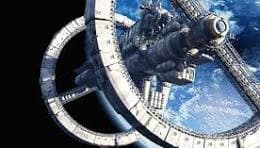
Future space stations are expected to become the essential infrastructure supporting this transformation. Rather than serving as isolated laboratories, they could function as orbital cities, connecting Earth with the Moon, Mars, and deep-space destinations.
More Than Laboratories
The International Space Station (ISS) proved that humans can live and work in orbit for months at a time. Future stations aim to go much further.
They are expected to support:
- Scientific research
- Commercial manufacturing
- Space tourism
- Medical innovation
- Satellite servicing
- Deep-space mission preparation
- Space education
- International collaboration
- Resource processing
- AI-driven autonomous operations
Instead of focusing on one purpose, future stations may operate like modern research campuses combined with industrial parks and transportation hubs.
Supporting Deep-Space Exploration
One of the greatest challenges in reaching Mars or other distant destinations is the duration of the journey.
A mission to Mars may require:
- Six to nine months of travel each way
- Extended stays on the Martian surface
- Reliable life-support systems
- Protection from radiation
- Efficient logistics
Future space stations can serve as staging areas where spacecraft are assembled, fueled, inspected, and supplied before departing for deep space.
Important Note
Launching an interplanetary spacecraft directly from Earth's surface requires enormous amounts of fuel because it must overcome Earth's gravity. Assembling and fueling spacecraft in orbit can reduce some mission constraints and increase design flexibility, although the exact benefits depend on mission architecture.
Enabling a Sustainable Space Economy
Economists increasingly describe space as the next major industrial frontier.
Future space stations may become centers for industries that benefit from the unique conditions of microgravity.
Potential sectors include:
- Pharmaceutical research
- Semiconductor manufacturing
- Fiber optic production
- Advanced crystal growth
- Biological engineering
- High-purity materials
- Satellite maintenance
- Orbital construction
As launch costs continue to decline, some products that are difficult or impossible to manufacture on Earth may become commercially viable in space.
Preparing Humanity for Permanent Space Habitats
Long-term survival of humanity has inspired scientists and philosophers for generations.
While Earth will remain humanity's primary home for the foreseeable future, establishing permanent infrastructure beyond Earth could:
- Improve resilience against global catastrophes
- Expand scientific opportunities
- Enable exploration of the Solar System
- Foster technological innovation
- Inspire international cooperation
Future space stations represent one of the first practical steps toward this long-term vision.
How Future Space Stations Will Work
Although each proposed station differs in design, most share a common operational philosophy: combining modular construction, autonomous systems, reusable transportation, and sustainable life-support technologies.
Unlike earlier stations that relied heavily on human intervention, future stations are expected to operate with much greater autonomy.
Modular Architecture
Instead of launching one enormous structure, future stations will likely be assembled from multiple specialized modules.
A typical next-generation station could include:
| Module | Primary Purpose |
|---|---|
| Habitat Module | Living quarters for astronauts |
| Science Laboratory | Research experiments |
| Medical Module | Health monitoring and treatment |
| Manufacturing Module | Industrial production |
| Greenhouse | Food production and oxygen generation |
| Logistics Module | Storage and supplies |
| Docking Hub | Spacecraft arrivals and departures |
| Power Module | Solar arrays and energy storage |
| Robotic Operations Module | Maintenance and external repairs |
This modular approach allows stations to expand gradually over many years.
Autonomous Operations
Future stations will likely rely heavily on automation.
Many routine activities may occur without direct human involvement.
Examples include:
- Monitoring air quality
- Managing water recycling
- Detecting equipment failures
- Controlling thermal systems
- Scheduling maintenance
- Tracking inventory
- Coordinating robotic inspections
Automation reduces crew workload while improving operational reliability.
Digital Twin Technology
One emerging concept is the use of a digital twin.
A digital twin is a highly detailed virtual model of the space station that continuously updates using real-time sensor data.
Engineers on Earth could use it to:
- Predict equipment failures
- Test repairs virtually
- Optimize energy usage
- Monitor structural health
- Improve mission planning
This approach is already being explored in aerospace, manufacturing, and infrastructure management.
Orbital Construction
Future stations may increasingly be assembled directly in space rather than launched fully built.
This strategy offers several advantages:
- Larger structures
- Lower launch constraints
- Easier expansion
- Reduced structural stress during launch
- More flexible architecture
Researchers are also investigating robotic assembly systems capable of constructing large orbital structures with minimal human supervision.
Core Technologies Behind Future Space Stations
Developing a next-generation space station requires integrating numerous advanced technologies.
Many of these already exist in experimental form, while others remain active areas of research.
Artificial Intelligence
Artificial intelligence is expected to become one of the most transformative technologies aboard future space stations.
Rather than acting as a replacement for astronauts, AI will function as an intelligent assistant capable of continuously monitoring thousands of systems simultaneously.
Predictive Maintenance
Modern spacecraft contain thousands of components.
Instead of waiting for failures, AI systems can analyze sensor data to predict when equipment is beginning to degrade.
Potential benefits include:
- Fewer unexpected failures
- Longer equipment lifespan
- Reduced maintenance costs
- Improved crew safety
Predictive maintenance has already become common in aviation and industrial manufacturing.
Intelligent Resource Management
Space stations operate with limited resources.
AI can optimize:
- Electricity usage
- Oxygen production
- Water recycling
- Food inventory
- Waste processing
- Temperature control
Small improvements in efficiency can significantly reduce mission costs over long-duration missions.
Scientific Assistance
Future AI systems may assist researchers by:
- Identifying unusual experimental results
- Automating repetitive laboratory tasks
- Managing large scientific datasets
- Suggesting new research directions
Human scientists would still make final decisions, but AI could greatly accelerate research.
Robotics and Automation
Robots have been part of space missions for decades.
Future stations are expected to rely on far more capable robotic systems.
External Maintenance Robots
Spacewalks remain among the most dangerous activities astronauts perform.
Advanced robotic arms and autonomous repair robots could handle many external tasks such as:
- Solar panel inspection
- Hull inspection
- Antenna replacement
- Sensor installation
- Structural repairs
Reducing the number of required spacewalks improves astronaut safety.
Internal Service Robots
Inside the station, mobile robots may assist with:
- Delivering supplies
- Cleaning
- Inventory management
- Emergency response
- Medical support
- Equipment transportation
These systems are expected to become increasingly autonomous as AI capabilities improve.
Swarm Robotics
Researchers are also studying groups of small cooperative robots.
Instead of relying on one large machine, dozens of smaller robots could work together to:
- Inspect the station
- Build structures
- Repair damage
- Assemble new modules
Swarm robotics offers redundancy because the failure of one robot has minimal impact on the overall mission.
Expert Insight
Swarm robotics is inspired by the collective behavior of ants, bees, and termites. Engineers are adapting these biological strategies to improve the reliability of autonomous space construction and maintenance.
Advanced Life-Support Systems
Perhaps the most critical technology aboard any future space station is its life-support system.
Without continuous resupply from Earth, astronauts must recycle nearly every essential resource.
Air Recycling
Humans consume oxygen while producing carbon dioxide.
Future life-support systems aim to:
- Remove carbon dioxide efficiently
- Generate oxygen continuously
- Monitor atmospheric composition
- Maintain ideal humidity
- Eliminate airborne contaminants
Advanced filtration technologies are expected to improve both efficiency and reliability.
Water Recovery
Water is extremely valuable in space.
Modern recycling systems already recover much of the water used aboard the ISS.
Future systems aim to recycle an even higher percentage by recovering water from:
- Breath
- Sweat
- Urine
- Hygiene activities
- Laboratory processes
A highly efficient closed-loop water system reduces dependence on Earth-based resupply missions.
Waste Recycling
Future stations are expected to treat waste as a resource rather than simply discarding it.
Possible recycled outputs include:
- Water
- Fertilizer
- Industrial feedstock
- Methane
- Hydrogen
- Construction materials
This circular approach is essential for long-duration missions to the Moon and Mars.
Space Agriculture
Fresh food provides nutritional, psychological, and medical benefits.
Future orbital greenhouses may grow:
- Leafy vegetables
- Tomatoes
- Strawberries
- Wheat
- Potatoes
- Herbs
Plants also contribute to:
- Oxygen production
- Carbon dioxide removal
- Humidity regulation
- Crew well-being
Research into controlled-environment agriculture in microgravity continues to advance.
Artificial Gravity: One of Space Engineering's Greatest Challenges
One of the biggest limitations of long-term spaceflight is microgravity.
Extended exposure can lead to:
- Bone density loss
- Muscle atrophy
- Vision changes
- Cardiovascular adaptations
- Balance disorders
Artificial gravity could mitigate many of these effects.
Rotating Space Stations
The most widely studied approach involves rotating part or all of the station.
As the station spins, occupants experience an outward force that can mimic gravity.
The faster the rotation and the larger the radius, the stronger the perceived gravitational effect.
This principle has been understood for over a century and has appeared in numerous engineering studies and science fiction concepts.
Engineering Challenges
Creating artificial gravity is far from simple.
Engineers must address:
- Structural stability
- Rotation speed
- Human motion sickness
- Docking complexity
- Power requirements
- Emergency procedures
No large rotating habitat has yet been built in space, making this one of the most active areas of future research.
Scientific Fact
Artificial gravity generated through rotation is based on well-established physics. However, no full-scale rotating human habitat has yet demonstrated its long-term practicality in orbit.
Power Generation and Energy Storage
Reliable power is the backbone of every space station.
Future habitats will require far more electricity than current orbital laboratories due to increased automation, manufacturing, computing, and life-support demands.
Advanced Solar Arrays
Solar energy will likely remain the primary power source for stations operating in Earth orbit.
Next-generation solar arrays are expected to provide:
- Higher efficiency
- Lower mass
- Greater durability
- Automatic sun tracking
- Improved radiation resistance
Flexible and roll-out solar panel designs can deliver large power outputs while reducing launch volume.
Energy Storage
Since orbital stations periodically pass through Earth's shadow, they must store energy for times when sunlight is unavailable.
Future energy storage systems may include:
- High-capacity lithium-based batteries
- Solid-state battery technologies
- Advanced fuel cells
- Hybrid storage systems
These technologies aim to provide greater reliability and longer operational lifetimes.Write your article here...
About the Author
Aslam Hossain is the founder and editor of Vishtech Blog, creating accessible technology content about AI, software, startups, robotics, cybersecurity, and future innovations.
Comments
Article text preview: Why Humanity Needs Future Space Stations Humanity has reached a turning point in space exploration. For decades, missions beyond Earth were primarily