Biotechnology
How Genes Determine Human Traits: DNA, Inheritance & Genetics #part2
Discover how genes influence human traits through DNA, inheritance, proteins, and genetic variation. A beginner-friendly, scientifically accurate guide.
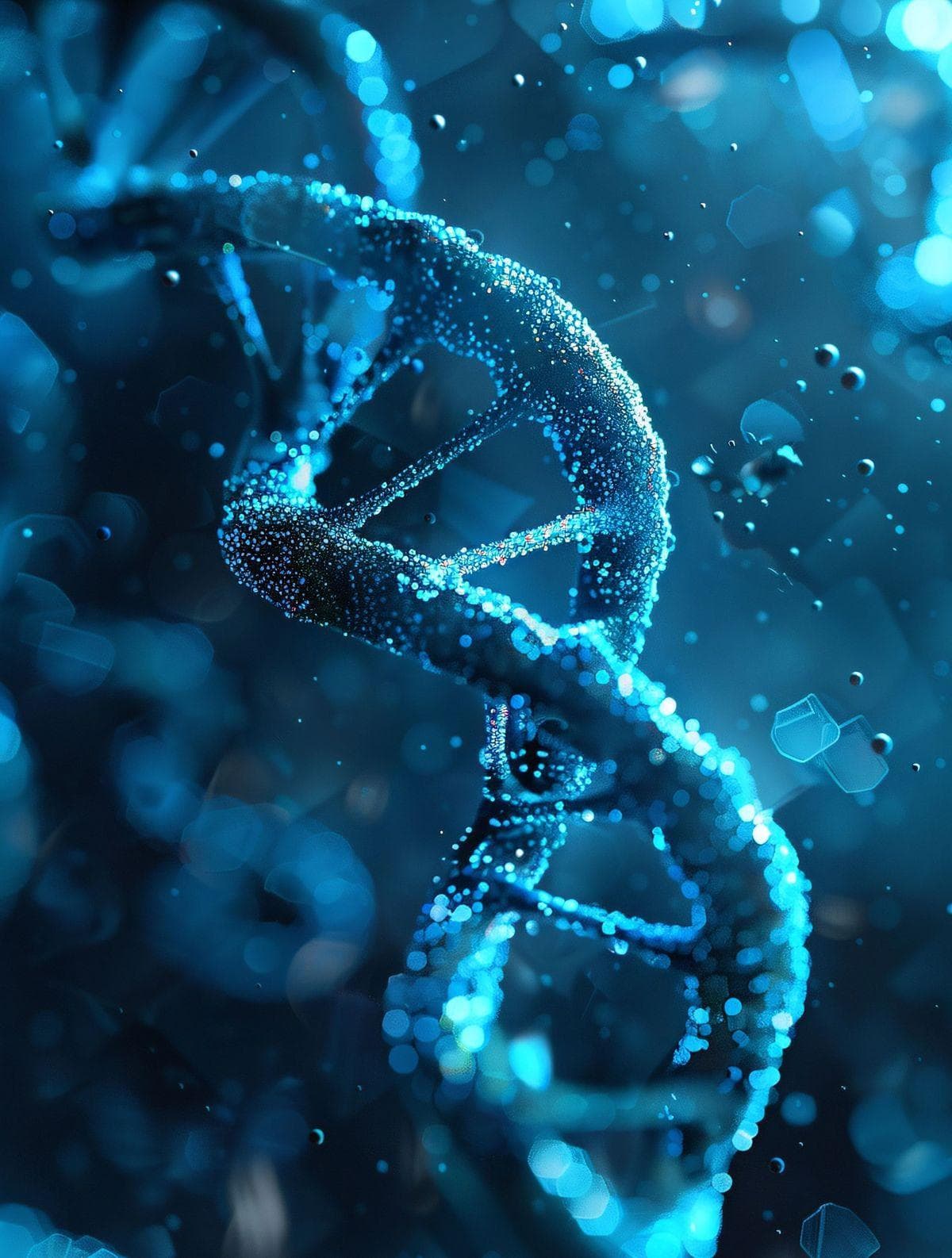
Sponsored by Aslam Hossain. This article contains sponsored content.
Premium article: membership access controls are enabled for this content architecture.
Genetics and DNA: The Complete Guide to Understanding the Blueprint of Life
Quick Summary
DNA is often described as the "blueprint of life," but that phrase only scratches the surface. DNA stores the biological instructions that allow every living organism to grow, function, reproduce, and evolve. This article explores what DNA is, how genes influence our traits, how inheritance works, and why modern genetic technologies such as CRISPR are transforming medicine, agriculture, and biotechnology.
Key Highlights
- Learn what DNA actually is.
- Discover how genes determine human characteristics.
- Understand chromosomes and the human genome.
- Explore the history of DNA discovery.
- Learn how DNA stores biological information.
- Understand why genetics matters in medicine.
- Preview modern breakthroughs including CRISPR gene editing.
- Discover future possibilities of genomic medicine.
Featured Snippet
What is DNA?
DNA (Deoxyribonucleic Acid) is the molecule that stores the genetic instructions used by almost every living organism. It contains genes that direct how cells grow, function, repair themselves, and reproduce. Every human cell contains approximately 3 billion DNA base pairs that together form the human genome.
Table of Contents
- Introduction
- Why Genetics Matters Today
- What Is DNA?
- The Discovery of DNA
- The Structure of DNA
- DNA Inside Human Cells
- How DNA Stores Information
- Why DNA Is Called the Blueprint of Life
- Scientific Facts
- Summary
Introduction
Imagine being able to build an entire human body from a microscopic instruction manual.
Every heartbeat.
Every breath.
Every strand of hair.
Every neuron in the brain.
Every immune cell fighting disease.
Every tiny biological process begins with a remarkable molecule called DNA.
Although invisible to the naked eye, DNA contains one of the most sophisticated information systems ever discovered in nature. It determines many of the characteristics that make us unique while simultaneously connecting every human being through a shared biological code.
For centuries, scientists wondered how parents passed traits to their children. Why do siblings resemble one another yet remain different? Why do certain diseases run in families? Why are some people naturally more resistant to infections while others inherit rare genetic disorders?
The answers to these questions lie within genetics—the scientific study of heredity and variation—and its central molecule, DNA.
Today, genetics is one of the fastest-growing fields in science. It influences medicine, agriculture, forensic science, conservation biology, personalized healthcare, and even our understanding of human evolution.
Modern genetic research has enabled scientists to sequence entire genomes, identify disease-causing mutations, develop targeted therapies, and edit genes with remarkable precision using technologies such as CRISPR-Cas9.
What once belonged only to science fiction is rapidly becoming a reality.
Understanding DNA is no longer just for scientists. As genetic testing becomes more common and personalized medicine continues to advance, genetics is becoming part of everyday life.
Whether you are a student, healthcare professional, researcher, or simply curious about how life works, understanding genetics provides valuable insight into the biological processes that shape every living organism.
Why Genetics Matters Today
Genetics influences nearly every aspect of modern biology and medicine.
From diagnosing inherited diseases to designing personalized cancer treatments, DNA has become one of the most powerful tools in scientific research.
Today, genetics helps scientists:
- Identify inherited disorders before symptoms appear.
- Develop precision medicine tailored to individual patients.
- Improve crop resistance to drought and disease.
- Track infectious disease outbreaks.
- Understand human evolution and migration.
- Identify victims through forensic DNA analysis.
- Develop gene therapies for previously untreatable diseases.
As DNA sequencing becomes faster and more affordable, genetic information is increasingly guiding medical decisions that once relied solely on symptoms.
Example Image Placement
Figure 1. The DNA double helix, chromosomes inside the cell nucleus, the arrangement of DNA base pairs (A, T, C, G), and a visualization of the human genome. These illustrations help readers understand how genetic information is organized from the molecular level to the entire genome.
What Is DNA?
DNA, or Deoxyribonucleic Acid, is the hereditary material found in nearly every living organism. It serves as the biological instruction manual that tells cells how to grow, divide, repair themselves, and perform specialized functions.
If we compare the human body to a vast library, DNA would be the complete collection of books containing every instruction needed to build and maintain that library.
Every cell—whether it becomes part of your skin, brain, heart, or lungs—contains essentially the same DNA. What makes cells different is not the DNA they possess but which genes are active or inactive.
This selective use of genetic information allows one fertilized egg to develop into the trillions of specialized cells that make up the human body.
DNA by the Numbers
| Feature | Approximate Value |
|---|---|
| DNA per human cell | ~2 meters (when stretched) |
| Number of chromosomes | 46 (23 pairs) |
| Human genes | ~20,000–21,000 |
| DNA base pairs | ~3 billion |
| Similarity between humans | ~99.9% |
Scientific Fact: Although every person's DNA is unique, humans share about 99.9% of their DNA sequence with one another. The remaining small fraction contributes to much of our genetic diversity.
A Brief History of DNA Discovery
The story of DNA spans more than a century and involves the work of many scientists whose discoveries gradually revealed how hereditary information is stored.
1869 – Friedrich Miescher
Swiss physician Friedrich Miescher isolated a previously unknown substance from white blood cells. He called it nuclein, unaware that it would later become known as DNA.
Early 1900s – Chromosomes and Heredity
Scientists established that chromosomes carried hereditary information, but proteins—not DNA—were widely believed to be the genetic material.
1944 – Avery, MacLeod, and McCarty
Their experiments demonstrated that DNA, rather than protein, carries genetic information, fundamentally changing biological science.
1952 – Hershey and Chase
Using bacteriophages, Alfred Hershey and Martha Chase provided strong experimental evidence that DNA is the hereditary molecule.
1953 – The Double Helix
James Watson and Francis Crick proposed the double-helix structure of DNA, drawing on crucial X-ray diffraction data produced by Rosalind Franklin and Maurice Wilkins. This discovery explained how genetic information could be stored and copied.
2003 – Human Genome Project
An international research effort completed the first reference sequence of the human genome, providing an unprecedented resource for biology and medicine.
Example Image Placement
Figure 2. Key milestones in the discovery of DNA—from early isolation of nuclein to the Human Genome Project—highlighting the collaborative nature of modern genetics.
The Structure of DNA
One of the most recognizable scientific images is the DNA double helix. Two long strands wind around each other like a twisted ladder.
Each strand is built from repeating units called nucleotides, and every nucleotide contains:
- A sugar molecule (deoxyribose)
- A phosphate group
- One nitrogenous base
There are four DNA bases:
- Adenine (A)
- Thymine (T)
- Cytosine (C)
- Guanine (G)
These bases pair in a highly specific way:
- Adenine always pairs with Thymine (A–T)
- Cytosine always pairs with Guanine (C–G)
This complementary pairing allows DNA to be copied with remarkable accuracy during cell division, ensuring that genetic information is faithfully passed from one cell generation to the next.
Genes, Chromosomes, and the Language of Life
Every living organism, from a microscopic bacterium to a giant blue whale, depends on genetic information to survive. While DNA serves as the storage medium, genes are the functional units that contain specific biological instructions. These instructions tell cells how to build proteins, regulate chemical reactions, and respond to changes in the environment.
A helpful analogy is to imagine DNA as an enormous library. Within that library, chromosomes are the books, genes are the individual chapters, and the DNA bases (A, T, C, and G) are the letters that form the words and sentences. Together, they create a biological language capable of directing the development and maintenance of an entire organism.
Example Image Placement
Figure 3. The relationship between DNA, chromosomes, genes, and proteins. This sequence illustrates how genetic information flows from DNA to functional molecules that keep cells alive.
What Is a Gene?
A gene is a specific segment of DNA that contains the instructions for making a functional product, usually a protein or a functional RNA molecule. Proteins perform countless tasks in the body, including building tissues, transporting oxygen, defending against infections, and regulating metabolism.
Genes vary greatly in size. Some consist of only a few hundred DNA base pairs, while others span more than two million base pairs. The human genome contains approximately 20,000–21,000 protein-coding genes, yet these genes work together to produce the extraordinary complexity of the human body.
It is important to understand that genes do not act in isolation. They interact with one another and with environmental factors such as nutrition, lifestyle, exposure to pollutants, and infections. As a result, many human traits are influenced by both genetics and environment.
Important Note: Having a particular gene does not always guarantee a specific outcome. In many cases, genes increase or decrease the likelihood of a trait or disease rather than determining it with absolute certainty.
What Are Chromosomes?
DNA molecules are extremely long. If the DNA from a single human cell were stretched out, it would measure roughly 2 meters (about 6.5 feet). To fit inside the microscopic nucleus of a cell, DNA is tightly wrapped around proteins called histones, forming a compact structure known as chromatin. During cell division, chromatin condenses into visible chromosomes.
Humans normally have 46 chromosomes, arranged into 23 pairs:
- 22 pairs of autosomes, which carry most of our genes.
- 1 pair of sex chromosomes, which determine biological sex:
- XX in most females.
- XY in most males.
Each chromosome contains hundreds to thousands of genes, making chromosomes efficient packages for organizing and transmitting genetic information.
Human Chromosome Facts
| Feature | Description |
|---|---|
| Total chromosomes | 46 |
| Chromosome pairs | 23 |
| Autosome pairs | 22 |
| Sex chromosome pair | 1 |
| DNA per cell | ~2 meters when stretched |
| Protein-coding genes | ~20,000–21,000 |
The Human Genome
The human genome is the complete set of DNA contained within a person's cells. It includes both genes and non-coding DNA. Although genes receive much attention, they make up only a small portion of the genome. Large regions of non-coding DNA help regulate when and where genes are switched on or off.
The first complete reference sequence of the human genome, produced through the Human Genome Project, transformed biology by providing scientists with a detailed map of our genetic information. Today, advances in DNA sequencing allow genomes to be analyzed far more quickly and at a fraction of the original cost, supporting research into rare diseases, cancer, and precision medicine.
Scientific Fact: More than 99.9% of the DNA sequence is shared among all humans. The small remaining fraction contributes to differences such as eye color, height, susceptibility to certain diseases, and many other characteristics.
How Genes Determine Human Traits
Why do children often resemble their parents? Why do siblings look similar yet remain unique individuals? The answer lies in how genes are inherited and expressed.
Genes influence a wide variety of traits, including:
- Eye color
- Hair color
- Skin pigmentation
- Blood type
- Height (partly)
- Bone structure
- Metabolism
- Certain disease risks
Some traits are controlled mainly by a single gene, while many others result from the combined effects of hundreds or even thousands of genes interacting with environmental influences.
Example: Eye Color
Eye color depends on multiple genes involved in the production and distribution of the pigment melanin. Brown eyes generally contain more melanin than blue or green eyes, but the final eye color results from the interaction of several genes rather than a single "eye color gene."
Example: Height
Height is a polygenic trait, meaning it is influenced by many genes. Nutrition, childhood health, sleep, and other environmental factors also play important roles. Two people with similar genetic potential for height may grow to different adult heights if they experience different environmental conditions during development.
Expert Insight: Most common human traits are influenced by a combination of genetics and environment. This interaction is one of the central concepts in modern genetics.
From DNA to Protein: Gene Expression
Possessing genetic information is not enough; cells must also use it. The process by which information stored in DNA is used to produce functional molecules is known as gene expression.
Gene expression occurs in two major stages:
- Transcription
- Translation
Together, these processes are often described as the Central Dogma of Molecular Biology.
Step 1: Transcription
During transcription, a specific section of DNA is copied into a molecule called messenger RNA (mRNA). This occurs inside the cell nucleus.
The DNA itself remains safely stored, while the mRNA carries the genetic instructions to the cell's protein-making machinery.
Think of DNA as the master blueprint kept in a secure archive. Instead of removing the original blueprint every time a protein is needed, the cell makes a working copy—the mRNA.
Step 2: Translation
The mRNA travels to structures called ribosomes, where its sequence is read three bases at a time. Each group of three bases, known as a codon, specifies a particular amino acid.
Amino acids are linked together to form a protein. Once folded into its correct three-dimensional shape, the protein performs its specific function within the cell.
This flow of information can be summarized as:
DNA → RNA → Protein
Proteins created through this process carry out nearly every biological function, from transporting oxygen in red blood cells to enabling muscles to contract and antibodies to recognize harmful pathogens.
Example Image Placement
Figure 4. The central dogma of molecular biology. DNA is transcribed into RNA, which is then translated into proteins that perform essential functions in the cell.
Gene Regulation: Why Cells Are Different
Every cell in the human body contains essentially the same DNA, yet a neuron behaves very differently from a liver cell or a muscle cell. This difference arises because different genes are active in different cell types.
Cells use complex regulatory mechanisms to determine:
- Which genes are turned on.
- Which genes remain inactive.
- When genes should be activated.
- How much protein should be produced.
This regulation allows specialized cells to perform unique roles while sharing the same genetic blueprint.
For example:
- Muscle cells produce proteins needed for contraction.
- Neurons produce proteins involved in transmitting electrical signals.
- Immune cells produce antibodies and signaling molecules that help defend the body.
Gene regulation is therefore essential for normal growth, development, and adaptation.
DNA Replication: Copying the Blueprint
Before a cell divides, it must make an accurate copy of its DNA so that each daughter cell receives the same genetic information. This process is called DNA replication.
During replication:
- The double helix unwinds.
- The two strands separate.
- Each original strand serves as a template.
- New complementary strands are synthesized.
- Two identical DNA molecules are produced.
This mechanism relies on the complementary base-pairing rules:
- Adenine pairs with Thymine.
- Cytosine pairs with Guanine.
Because of these precise pairing rules, DNA replication is remarkably accurate, although occasional mistakes—called mutations—can occur.
Scientific Fact: Human cells contain proofreading enzymes that correct many replication errors, helping preserve genetic stability over billions of cell divisions throughout a lifetime.
Summary Box
In this section, you learned that:
- Genes are specific segments of DNA that contain instructions for building proteins.
- Chromosomes package DNA into compact structures within the cell nucleus.
- The human genome contains all of a person's genetic information.
- Most human traits arise from interactions between genes and the environment.
- Gene expression converts DNA instructions into functional proteins through transcription and translation.
- DNA replication ensures that genetic information is accurately passed to new cells during cell division.
About the Author
Aslam Hossain is the founder and editor of Vishtech Blog, creating accessible technology content about AI, software, startups, robotics, cybersecurity, and future innovations.
Comments
Article text preview: Genetics and DNA: The Complete Guide to Understanding the Blueprint of Life Quick Summary DNA is often described as the "blueprint of life," but that