Biomedical Engineering
How Memory and Learning Work: The Science Behind the Human Brain #part2
Discover how the human brain forms, stores, and retrieves memories. Learn the science of memory, learning, neuroplasticity, sleep, and brain health.
Sponsored by Aslam Hossain. Hi I am aslam hossain. co founder and ceo of vishtech
Premium article: membership access controls are enabled for this content architecture.
Why Do We Forget? The Science Behind Memory Loss
Forgetting is often viewed as a weakness of the human brain. We become frustrated when we forget someone's name moments after being introduced, misplace our keys, or struggle to recall information during an important examination. However, modern neuroscience tells a very different story.
Forgetting is not a flaw—it is an essential feature of a healthy brain.
If every experience, conversation, sound, and image were remembered forever with perfect detail, the brain would quickly become overwhelmed by an enormous amount of unnecessary information. Instead, the nervous system continuously evaluates which memories remain useful and which can gradually fade away.
This ability allows the brain to stay flexible, adapt to new environments, and prioritize information that is most valuable for survival and everyday decision-making.
Figure 12. The human brain continuously reorganizes stored information. Important memories are reinforced through repeated neural activity, while less useful connections gradually weaken, making room for new learning.
Forgetting Begins When Memories Are Not Reinforced
Every memory depends on networks of neurons communicating through synapses. These connections are not permanent from the moment they are formed. Instead, they require repeated activation to remain strong.
Imagine learning a new phone number. If you never use it again, the neural pathway representing that information receives little activity. Over time, the synaptic connections weaken, making the memory increasingly difficult to retrieve.
On the other hand, information that is recalled frequently—such as your home address or native language—is repeatedly strengthened. Each retrieval reinforces the neural circuit, making future recall faster and more reliable.
Scientists often summarize this biological principle with the phrase:
"Use it, or lose it."
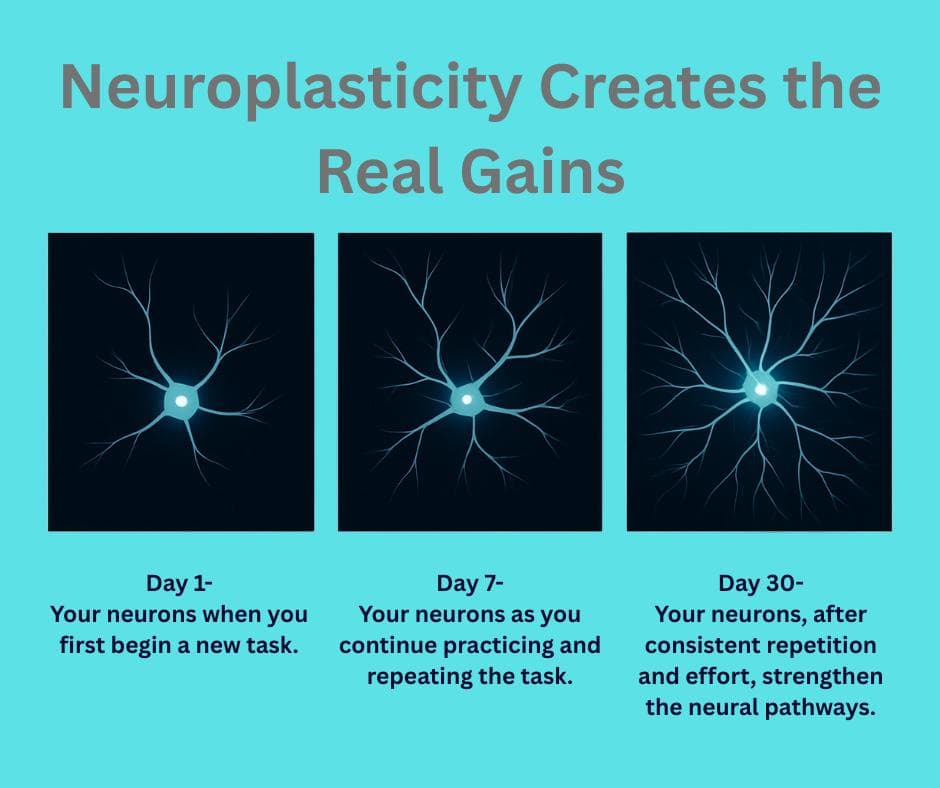
Although simplified, this statement reflects an important aspect of neuroplasticity. The brain invests energy in maintaining frequently used neural pathways while allowing less important ones to fade.
Figure 13. Repeated use strengthens synaptic connections, while inactive pathways gradually weaken. This dynamic process allows the brain to adapt continuously throughout life.
Interference: When Memories Compete
Sometimes memories are not lost—they are simply difficult to access because other memories interfere with them.
This phenomenon is known as memory interference.
For example, imagine moving to a new house. For weeks, you may accidentally drive toward your previous address because the older memory has been reinforced over many years. Eventually, as the new route is repeated, the brain strengthens the new neural pathway while the older habit becomes less dominant.
Interference can also occur when studying similar subjects. Learning two foreign languages simultaneously or memorizing similar scientific terms may temporarily create confusion because related neural networks compete during retrieval.
Rather than erasing memories, the brain must decide which pathway is most relevant at a particular moment.
Figure 14. Similar memories can compete during retrieval. The brain must select the appropriate neural pathway, sometimes causing temporary confusion or delayed recall.
The Role of Attention in Forgetting
Many everyday memory failures occur before a memory is even created.
If your attention is divided while someone introduces themselves, the information may never be fully encoded in the first place. Later, it feels as though you have forgotten their name, but in reality, the brain never formed a strong memory.
Attention acts as the gateway to memory formation. When we are distracted by smartphones, background conversations, stress, or multitasking, fewer cognitive resources are available for encoding new information.
This explains why mindful learning often produces better long-term results than passive reading or distracted studying.
Researchers consistently find that focused attention activates broader neural networks, increasing the likelihood that new experiences will progress into long-term memory.
Figure 15. Focused attention strengthens memory encoding by allowing the brain to allocate more neural resources to processing important information. Distractions reduce the likelihood that experiences will become lasting memories.
Stress Can Both Strengthen and Weaken Memory
Emotions have a powerful influence on memory, but the relationship is complex.
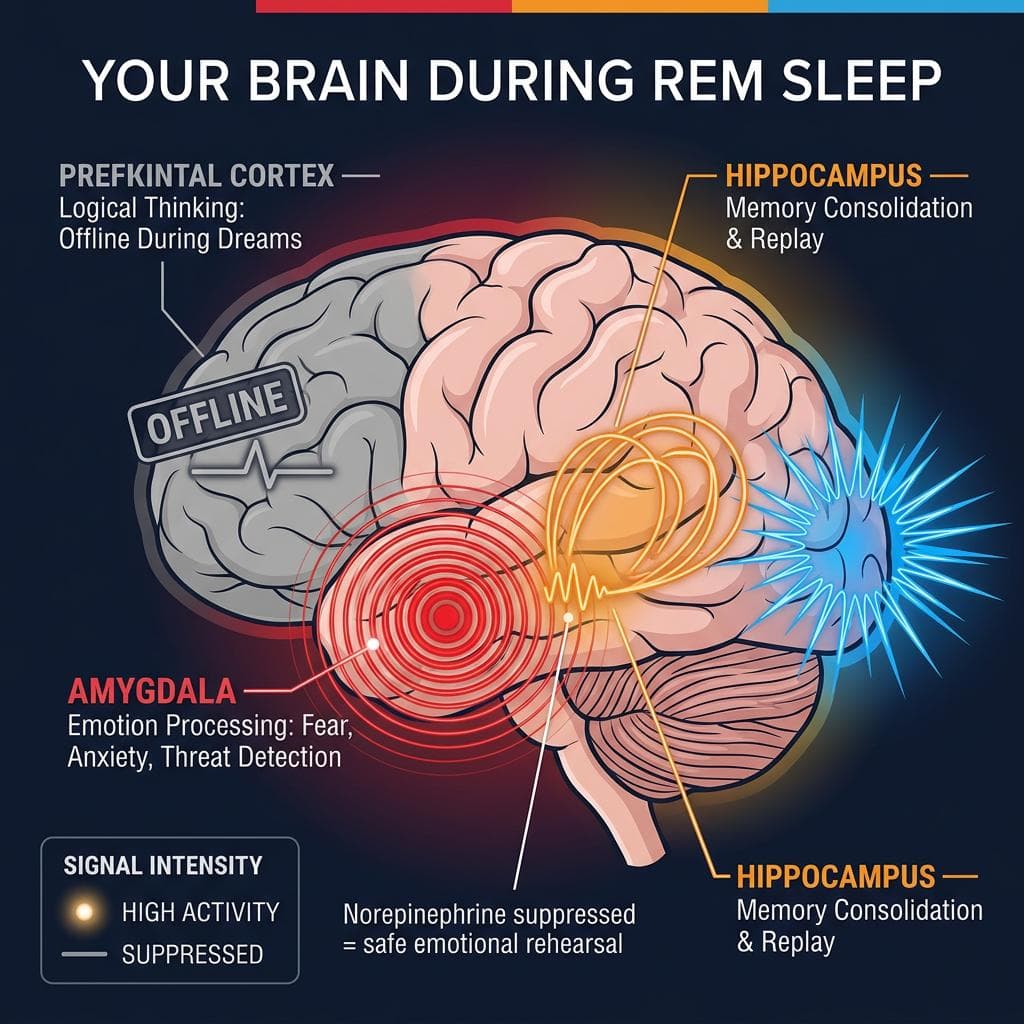
Moderate emotional experiences often enhance memory formation. Important celebrations, personal achievements, or emotionally significant conversations are remembered more vividly because emotional centers of the brain, particularly the amygdala, interact closely with memory-processing regions.
However, prolonged or extreme stress can have the opposite effect.
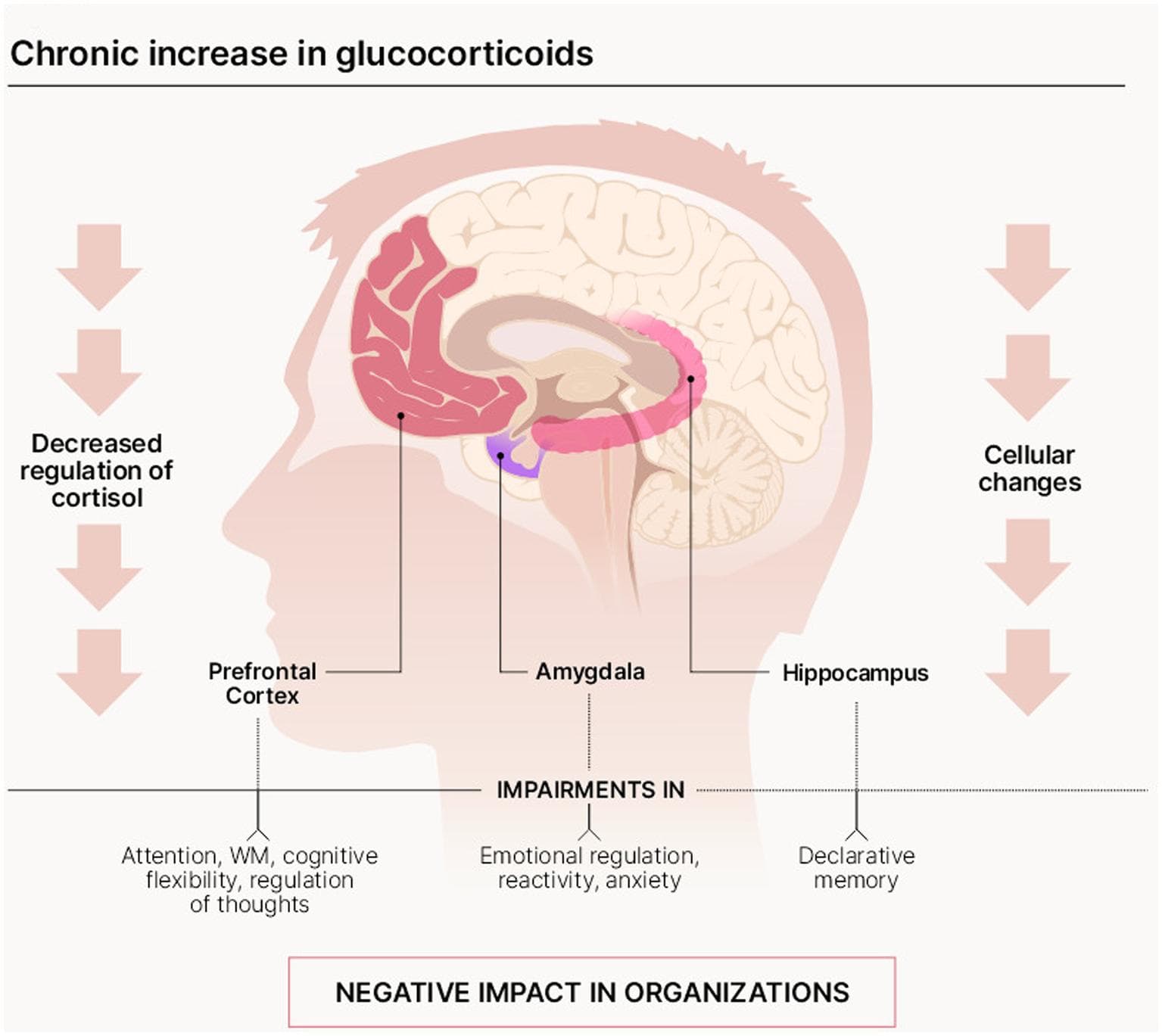
Chronic stress increases levels of the hormone cortisol, which, when elevated for long periods, may interfere with the normal functioning of the hippocampus. As a result, concentration becomes more difficult, new memories are harder to form, and recalling existing information may become less reliable.
This is one reason students often struggle to remember material during periods of severe examination anxiety, even when they studied thoroughly.
Figure 16. Emotional experiences influence memory through interactions between the amygdala and hippocampus. While moderate emotion can strengthen memory formation, prolonged stress and elevated cortisol may impair learning and recall.
Forgetting Makes Learning More Efficient
Although forgetting may seem frustrating, it serves an important biological purpose.
By gradually removing information that is no longer useful, the brain becomes more efficient at processing new experiences. Instead of preserving every insignificant detail, neural resources are directed toward knowledge, skills, and experiences that are repeatedly used throughout life.
This selective process helps maintain cognitive flexibility, allowing humans to adapt to changing environments, solve new problems, and continue learning without becoming overwhelmed by unnecessary information.
In many ways, forgetting is not the opposite of memory—it is one of the mechanisms that makes memory itself possible.
In the next section, we will explore how to improve memory naturally, examining the scientific evidence behind sleep, exercise, nutrition, repetition, active recall, and other lifestyle habits that strengthen learning and protect long-term brain health.Write your article here...
About the Author
Aslam Hossain is the founder and editor of Vishtech Blog, creating accessible technology content about AI, software, startups, robotics, cybersecurity, and future innovations.
Comments
Article text preview: Why Do We Forget? The Science Behind Memory Loss Forgetting is often viewed as a weakness of the human brain. We become frustrated when we forget some