Quantum Computing
Quantum Computing Explained: Complete Guide to How It Works, Applications, Future & Challenges #part1
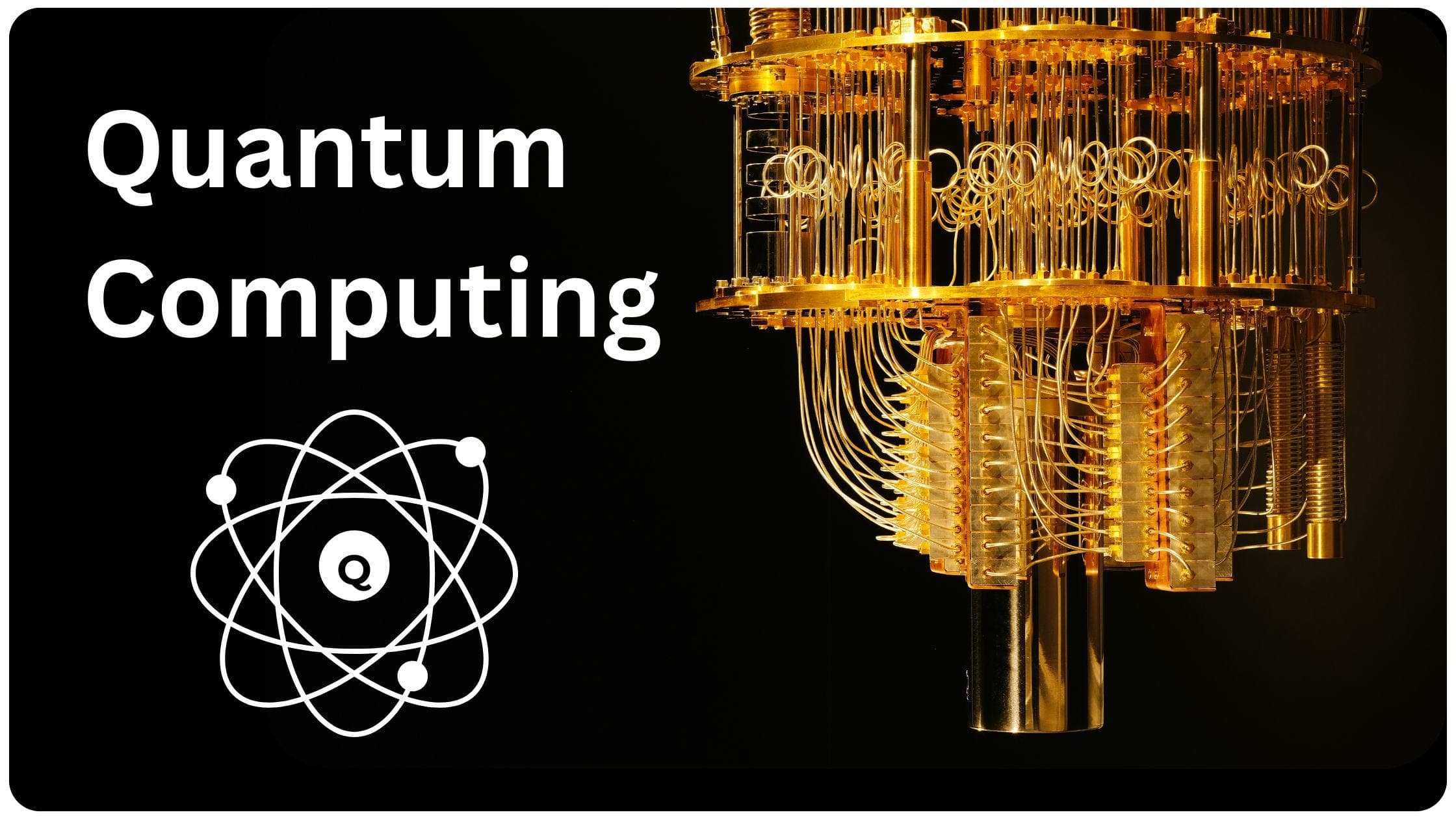
Quantum computing is a revolutionary computing paradigm that harnesses the principles of quantum mechanics to solve problems beyond the reach of today's classical computers. In this first part, you'll discover its origins, scientific foundations, history, evolution, and why it is considered one of the most transformative technologies of the 21st century.
Featured Snippet Answer
Quantum computing is a new type of computing technology that uses the principles of quantum mechanics to process information. Unlike classical computers that use binary bits (0 or 1), quantum computers use qubits, which can exist in multiple states simultaneously through a property called superposition. Combined with entanglement and quantum interference, quantum computers can solve certain complex problems exponentially faster than today's most powerful supercomputers.
Quick Summary
| Category | Details |
|---|---|
| Technology | Quantum Computing |
| Based On | Quantum Mechanics |
| Basic Unit | Qubit |
| Traditional Unit | Bit |
| Major Strength | Solving highly complex computational problems |
| Current Stage | Early Commercial & Active Research |
| Major Players | IBM, Google, Microsoft, Intel, IonQ, Rigetti, Quantinuum |
| Suitable For | Drug Discovery, Optimization, AI, Cryptography, Scientific Simulation |
Key Highlights
- Understand quantum computing from the ground up.
- Learn the science behind qubits.
- Discover why quantum computers are fundamentally different.
- Explore real-world applications.
- Understand current limitations.
- Learn where the technology is heading.
Table of Contents
- Introduction
- Why Quantum Computing Matters
- What Is Quantum Computing?
- The History of Quantum Computing
- Evolution of Quantum Computing
- Understanding the Science Behind Quantum Computing
- Quantum Mechanics: The Foundation
- Classical Computing vs Quantum Computing
- Why Classical Computers Face Limits
- Preparing to Understand Qubits (Part 2)
Introduction
For over seventy years, classical computers have driven nearly every technological revolution—from the invention of the internet to artificial intelligence, cloud computing, smartphones, and autonomous vehicles. Their performance has increased dramatically thanks to advances in semiconductor engineering, enabling devices small enough to fit in our pockets while performing billions of calculations every second.
Yet despite these remarkable achievements, some of humanity's most important computational challenges remain beyond the reach of even the world's fastest supercomputers. Simulating complex molecules, optimizing global logistics networks, designing new materials, and solving certain mathematical problems require computational resources that grow exponentially with problem size. In many cases, classical computers would need thousands or even millions of years to complete calculations that scientists would like to solve within hours or days.
This is where quantum computing enters the picture.
Rather than simply making today's computers faster, quantum computing represents an entirely different model of computation. It leverages the strange and often counterintuitive principles of quantum mechanics—the branch of physics that governs the behavior of atoms, electrons, and photons—to process information in fundamentally new ways.
Unlike traditional computers, which store information as bits that are either 0 or 1, quantum computers use quantum bits, or qubits, capable of existing in multiple states simultaneously. This unique capability allows quantum systems to explore vast computational possibilities that are inaccessible to conventional machines.
It is important to understand, however, that quantum computers are not replacements for classical computers. They are specialized devices designed to tackle specific classes of problems more efficiently than traditional hardware. Everyday tasks such as web browsing, document editing, or streaming videos will continue to rely on classical computers for the foreseeable future.
Instead, quantum computing aims to complement classical computing by addressing problems involving enormous search spaces, intricate simulations, and optimization tasks that are otherwise computationally prohibitive.
Important Note
Quantum computing is one of the most promising emerging technologies, but it is still in its early stages of development. While laboratory demonstrations and cloud-accessible quantum processors already exist, practical, fault-tolerant quantum computers capable of solving large-scale industrial problems remain an active area of research.
Why Quantum Computing Matters
Throughout history, breakthroughs in computing have reshaped society.
Consider a few milestones:
| Era | Computing Revolution |
|---|---|
| 1940s | Vacuum tube computers |
| 1960s | Integrated circuits |
| 1980s | Personal computers |
| 1990s | Internet revolution |
| 2000s | Smartphones |
| 2010s | Cloud Computing |
| 2020s | Artificial Intelligence |
| Future | Quantum Computing |
Each revolution unlocked entirely new possibilities.
Quantum computing has the potential to become the next major leap because it could dramatically accelerate scientific discovery rather than simply improving consumer electronics.
Possible future impacts include:
- Faster drug discovery
- New battery technologies
- Better fertilizers
- Climate modeling
- Improved financial optimization
- Supply chain optimization
- Advanced material science
- More capable artificial intelligence
- Secure quantum communication
However, many of these applications are still under active research and should not be viewed as guaranteed outcomes.
What Is Quantum Computing?
At its core, quantum computing is a computational paradigm that uses the laws of quantum physics to manipulate and process information.
Instead of electrical switches representing binary values, quantum computers manipulate microscopic quantum systems such as:
- Electrons
- Photons
- Trapped ions
- Neutral atoms
- Superconducting circuits
- Spins of atomic particles
These quantum systems obey physical laws that differ significantly from the classical physics governing everyday objects.
Because of these differences, quantum computers can represent and manipulate information in richer ways than classical machines.
A useful analogy is this:
Imagine searching for a specific page in a library.
A classical computer checks books one by one.
A quantum computer does not literally search every book at once, but certain quantum algorithms can evaluate many computational possibilities in ways that dramatically reduce the number of required steps for specific problems.
This distinction is important because popular explanations often exaggerate quantum computing by claiming it "tries every answer simultaneously." In reality, quantum algorithms exploit interference and probability amplitudes in mathematically precise ways to increase the likelihood of measuring the correct answer.
Scientific Definition
According to modern quantum information science:
Quantum computing is the study and implementation of computation using quantum-mechanical phenomena such as superposition, entanglement, and interference to encode, manipulate, and process information.
This field combines expertise from multiple disciplines:
- Physics
- Computer Science
- Mathematics
- Electrical Engineering
- Materials Science
- Information Theory
The History of Quantum Computing
Quantum computing did not emerge overnight. It is the culmination of decades of discoveries in both physics and computer science.
Early Foundations (1900–1930)
The story begins with the birth of quantum mechanics.
Scientists discovered that matter behaves very differently at microscopic scales.
Key contributors included:
- Max Planck, who introduced the concept of quantized energy.
- Albert Einstein, who explained the photoelectric effect using light particles (photons).
- Niels Bohr, who proposed a quantum model of the atom.
- Werner Heisenberg, who formulated the uncertainty principle.
- Erwin Schrödinger, who developed wave mechanics and the famous Schrödinger equation.
- Paul Dirac, who unified aspects of quantum theory and predicted antimatter.
These discoveries established the theoretical framework that would later inspire quantum information science.
Richard Feynman's Vision (1981)
A pivotal moment came in 1981 when physicist Richard Feynman observed that classical computers struggle to simulate quantum systems efficiently. He proposed that a computer built on quantum principles could perform these simulations far more naturally.
This idea is widely regarded as one of the conceptual foundations of quantum computing and shifted the field from theoretical curiosity toward a new model of computation.
"Nature isn't classical… and if you want to make a simulation of nature, you'd better make it quantum mechanical." — Richard Feynman
David Deutsch and the Universal Quantum Computer (1985)
Building on Feynman's insight, David Deutsch introduced the concept of a universal quantum computer in 1985. He demonstrated that quantum mechanics could support a general-purpose computational model analogous to the universal classical computer.
Deutsch's work established quantum computation as a rigorous area of computer science rather than solely a physics problem.
Quantum Algorithms Transform the Field (1990s)
The 1990s marked a turning point with the discovery of algorithms that showcased the potential advantages of quantum computation.
Notable breakthroughs included:
- Peter Shor's algorithm (1994), which showed that a sufficiently powerful quantum computer could factor large integers much faster than the best-known classical algorithms. This has major implications for modern public-key cryptography.
- Lov Grover's algorithm (1996), which demonstrated a quadratic speedup for searching unsorted databases and related problems.
These results provided concrete evidence that quantum computers could outperform classical machines for specific tasks.
Evolution of Quantum Computing
The development of quantum computing has accelerated rapidly over the past two decades.
| Time Period | Milestone |
|---|---|
| Early 2000s | Experimental quantum processors with only a few qubits |
| 2010–2015 | Improved qubit coherence and control techniques |
| 2016–2020 | Cloud-accessible quantum computing platforms introduced |
| 2019 | Google reported achieving "quantum supremacy" on a specialized benchmark, demonstrating a task performed faster by a quantum processor than a leading classical supercomputer for that specific problem |
| 2020–Present | Continued advances in hardware scalability, error mitigation, and quantum software ecosystems |
Today, organizations across academia, industry, and government are investing heavily in quantum technologies, with significant progress in both hardware and algorithms. However, building large-scale, fault-tolerant quantum computers remains one of the greatest engineering challenges in modern science.Write your article here...
Cloud Computing: Transforming the Digital World
Cloud computing has become one of the most important technologies in the modern digital era. It has revolutionized the way individuals, businesses, and organizations store, manage, and process data. Instead of relying on physical computers or local servers, cloud computing allows users to access computing resources over the internet. This technology provides flexibility, scalability, and cost-effectiveness, making it an essential part of today's information technology landscape.
Cloud computing refers to the delivery of computing services such as servers, storage, databases, networking, software, analytics, and artificial intelligence through the internet, commonly known as "the cloud." Users can access these services whenever they need them without purchasing or maintaining expensive hardware. Major cloud service providers include Amazon Web Services (AWS), Microsoft Azure, Google Cloud Platform (GCP), and IBM Cloud, which offer reliable and secure cloud solutions for businesses of all sizes.
One of the greatest advantages of cloud computing is its cost efficiency. Traditional IT infrastructure requires organizations to invest heavily in hardware, software, maintenance, and technical staff. With cloud computing, businesses only pay for the resources they use, reducing upfront costs and operational expenses. This pay-as-you-go model is especially beneficial for startups and small businesses that have limited budgets but require powerful computing resources.
Another significant benefit is scalability. Cloud services allow organizations to increase or decrease their computing resources based on demand. For example, an online shopping website may experience a surge in traffic during holiday sales. Cloud computing enables the website to automatically allocate additional resources to handle increased customer activity and then reduce those resources once traffic returns to normal. This flexibility ensures optimal performance while minimizing unnecessary costs.
Cloud computing also enhances collaboration and accessibility. Employees can access files, applications, and business systems from anywhere in the world using an internet connection. This capability has become particularly important with the rise of remote work and hybrid work environments. Teams can collaborate in real time using cloud-based applications such as Google Workspace, Microsoft 365, and Dropbox, improving productivity and communication.
There are three primary service models in cloud computing. The first is Infrastructure as a Service (IaaS), which provides virtualized computing resources such as servers, storage, and networking. Users have full control over the operating systems and applications while the cloud provider manages the underlying infrastructure. The second is Platform as a Service (PaaS), which offers a development environment where programmers can build, test, and deploy applications without worrying about infrastructure management. The third is Software as a Service (SaaS), where users access software applications through a web browser without installing them on their local devices. Popular examples include Gmail, Microsoft 365, and Salesforce.
Cloud computing can also be categorized into different deployment models. A public cloud is owned and operated by third-party providers and shared among multiple customers. A private cloud is dedicated to a single organization, offering greater control and security. A hybrid cloud combines both public and private cloud environments, allowing organizations to benefit from the strengths of each model. Multi-cloud strategies, which involve using services from multiple cloud providers, are also becoming increasingly popular.
Despite its many advantages, cloud computing also presents certain challenges. Security and privacy remain major concerns because sensitive data is stored on remote servers. Organizations must implement strong encryption, access controls, and security policies to protect their information. Internet dependency is another challenge since cloud services require a stable internet connection. Additionally, businesses may face vendor lock-in, making it difficult to migrate applications and data from one cloud provider to another.
The future of cloud computing looks extremely promising. Emerging technologies such as artificial intelligence, machine learning, edge computing, and the Internet of Things (IoT) are increasingly integrated with cloud platforms. These innovations enable faster data processing, smarter decision-making, and more efficient business operations. As organizations continue their digital transformation journeys, cloud computing will remain a critical foundation for innovation and growth.
In conclusion, cloud computing has fundamentally changed how technology is delivered and consumed. It offers numerous benefits, including reduced costs, improved scalability, enhanced collaboration, and greater accessibility. Although security and connectivity challenges exist, the advantages far outweigh the disadvantages. As technology continues to evolve, cloud computing will play an even greater role in shaping the future of businesses, education, healthcare, and everyday life. Understanding cloud computing is therefore essential for anyone preparing to succeed in the modern digital world.
About the Author
Aslam Hossain is the founder and editor of Vishtech Blog, creating accessible technology content about AI, software, startups, robotics, cybersecurity, and future innovations.
Comments
Article text preview: Featured Snippet Answer Quantum computing is a new type of computing technology that uses the principles of quantum mechanics to process information.