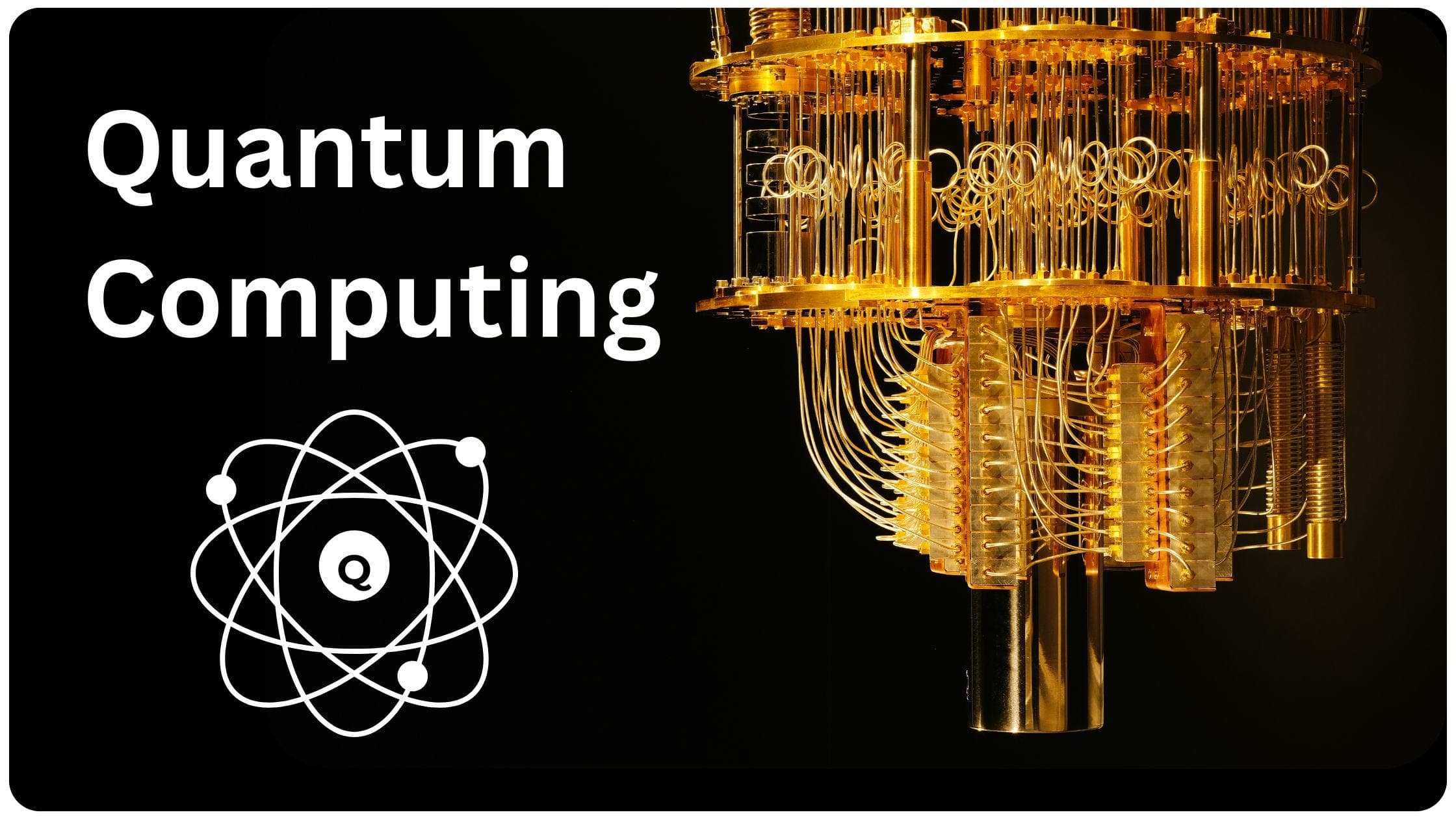
Quantum Computing
Quantum Computing: The Complete Guide#part3
Quantum computing is a revolutionary computing paradigm that harnesses the principles of quantum mechanics to solve problems beyond the reach of today's classical computers. In this first part, you'll discover its origins, scientific foundations, history, evolution, and why it is considered one of the most transformative technologies of the 21st century.

In Part 2, we explored the scientific principles behind quantum computing—qubits, superposition, entanglement, quantum gates, algorithms, and hardware. In this section, we'll examine where quantum computing can make a real-world impact, distinguish current capabilities from future potential, and review practical case studies across industries.
Table of Contents (Part 3)
- Why Quantum Computing Is Valuable
- Industries Adopting Quantum Computing
- Healthcare and Drug Discovery
- Chemistry and Materials Science
- Artificial Intelligence and Machine Learning
- Finance and Banking
- Cybersecurity and Cryptography
- Logistics and Supply Chain Optimization
- Climate Science and Environmental Modeling
- Energy Industry
- Manufacturing and Industrial Optimization
- Telecommunications
- Aerospace and Space Exploration
- Agriculture and Food Security
- Government, Defense, and National Security
- Real-World Case Studies
- Current Commercial Landscape
- Key Takeaways
Why Quantum Computing Is Valuable
Classical computers have powered extraordinary advances, but some computational problems become exponentially harder as they grow in size. For these problems, adding more processors or building larger supercomputers is often not enough.
Quantum computing is attractive because certain algorithms can explore specific mathematical structures more efficiently than known classical approaches.
However, it's essential to keep expectations realistic.
Important Note
Quantum computers are not universally faster than classical computers. Their advantages are expected only for particular categories of problems, and many practical applications are still under active research.
The greatest opportunities lie in problems involving:
- Molecular simulation
- Optimization
- Complex probability calculations
- Large-scale combinatorial search
- Quantum system modeling
Industries Adopting Quantum Computing
Interest in quantum computing now spans nearly every major industry.
| Industry | Current Status | Expected Long-Term Potential |
|---|---|---|
| Healthcare | Active research | Very High |
| Pharmaceuticals | Early adoption | Very High |
| Finance | Pilot projects | High |
| Manufacturing | Research | High |
| Logistics | Research | High |
| Artificial Intelligence | Experimental | High |
| Cybersecurity | Active development | Very High |
| Materials Science | Strong research | Very High |
| Energy | Growing investment | High |
| Aerospace | Early research | High |
Many organizations are experimenting today through cloud-accessible quantum platforms while preparing for more capable hardware in the future.
Healthcare and Drug Discovery
One of the most promising areas for quantum computing is healthcare.
Developing a new medicine is an expensive and time-consuming process that often takes 10–15 years and can cost billions of dollars.
A major challenge is accurately predicting how molecules interact.
Classical computers frequently rely on approximations because exact quantum simulations become computationally intractable for larger systems.
Quantum computers, by contrast, are naturally suited to modeling quantum systems.
Potential Applications
- Drug discovery
- Protein interaction modeling
- Personalized medicine
- Molecular design
- Medical imaging improvements
- Biomarker identification
Example
Researchers could simulate how a candidate drug binds to a target protein before extensive laboratory testing, potentially reducing the number of unsuccessful experiments.
Current Research
Several pharmaceutical companies are collaborating with quantum hardware and software providers to investigate molecular simulation. Most work remains in the research and proof-of-concept stage rather than routine clinical use.
Chemistry and Materials Science
Every material—from steel and batteries to solar panels—is ultimately governed by quantum mechanics.
Designing new materials often requires understanding the interactions of electrons within molecules and crystals.
Quantum computing could help scientists develop:
- Better batteries
- More efficient solar cells
- Stronger lightweight materials
- High-temperature superconductors
- Improved catalysts
- Advanced semiconductors
Example: Battery Technology
Electric vehicles require batteries with:
- Higher energy density
- Faster charging
- Longer lifespan
- Improved safety
Quantum simulations may enable researchers to discover new battery materials more efficiently than classical trial-and-error approaches.
Artificial Intelligence and Machine Learning
Artificial intelligence (AI) and quantum computing are two distinct technologies, but researchers are exploring how they might complement each other.
This emerging field is known as Quantum Machine Learning (QML).
Possible research directions include:
- Faster optimization
- Improved feature mapping
- Enhanced sampling methods
- Hybrid quantum-classical neural networks
However, there is no consensus that quantum computers will broadly replace classical AI hardware. Many AI workloads are expected to remain better suited to GPUs and other classical accelerators.
Expert Insight
In the foreseeable future, hybrid systems—where classical computers and quantum processors work together—are considered more realistic than fully quantum AI systems.
Finance and Banking
Financial institutions solve enormous optimization and probability problems every day.
Examples include:
- Portfolio optimization
- Risk analysis
- Derivatives pricing
- Fraud detection
- Asset allocation
- Market simulation
These problems often involve evaluating vast numbers of possible outcomes.
Quantum algorithms may eventually improve certain optimization and simulation tasks.
Example
A global investment firm may need to evaluate millions of possible investment combinations while balancing:
- Expected return
- Risk
- Liquidity
- Regulatory constraints
Quantum optimization techniques are being investigated as a possible tool for such scenarios.
Cybersecurity and Cryptography
Quantum computing has significant implications for cybersecurity.
Current Public-Key Cryptography
Today's internet relies heavily on cryptographic systems such as:
- RSA
- Elliptic Curve Cryptography (ECC)
These systems are considered secure against classical attacks because certain mathematical problems are computationally difficult.
The Quantum Challenge
Shor's algorithm demonstrates that a sufficiently powerful, fault-tolerant quantum computer could solve integer factorization and related problems much more efficiently than known classical algorithms.
This has motivated the development of post-quantum cryptography (PQC)—new cryptographic algorithms designed to remain secure against both classical and quantum attacks.
Scientific Fact
Current quantum computers are not yet capable of breaking widely used internet encryption at scale. Transitioning to post-quantum cryptography is a proactive measure to prepare for future capabilities.
Logistics and Supply Chain Optimization
Modern logistics networks involve billions of decisions.
Companies must optimize:
- Delivery routes
- Warehouse locations
- Shipping schedules
- Fuel consumption
- Vehicle utilization
- Inventory management
These are classic optimization problems.
Quantum optimization algorithms may help identify high-quality solutions more efficiently for certain large-scale scenarios.
Example
An international shipping company could potentially reduce:
- Transportation costs
- Fuel usage
- Delivery delays
- Carbon emissions
through improved optimization strategies.
Climate Science and Environmental Modeling
Climate systems are extraordinarily complex.
Scientists model interactions among:
- Atmosphere
- Oceans
- Ice sheets
- Vegetation
- Clouds
- Greenhouse gases
These simulations require enormous computational resources.
Quantum computing could eventually contribute to:
- More accurate climate simulations
- Improved weather forecasting
- Carbon capture material design
- Renewable energy optimization
However, these applications remain largely in the research phase.
Energy Industry
Energy companies solve challenging optimization and simulation problems.
Potential applications include:
- Smart electrical grids
- Fusion research
- Nuclear simulations
- Renewable energy forecasting
- Oil reservoir modeling
- Wind farm optimization
Quantum simulation may also accelerate the discovery of more efficient catalysts for hydrogen production and carbon reduction technologies.
Manufacturing and Industrial Optimization
Manufacturers manage thousands of interconnected processes.
Potential quantum applications include:
- Factory scheduling
- Robotic coordination
- Predictive maintenance
- Production optimization
- Material selection
- Quality control
These improvements could reduce waste and improve efficiency.
Telecommunications
Telecommunication networks route massive amounts of data every second.
Potential future applications include:
- Network optimization
- Traffic routing
- Quantum-secure communication
- Resource allocation
In parallel, researchers are developing quantum communication technologies that use quantum principles to enhance certain forms of secure information exchange.
Aerospace and Space Exploration
Space missions involve highly complex calculations.
Potential applications include:
- Spacecraft trajectory optimization
- Satellite scheduling
- Space weather modeling
- Materials for spacecraft
- Deep-space communication research
Although quantum computers are unlikely to replace onboard flight computers in the near future, they may become valuable tools for mission planning and scientific simulation on Earth.
Agriculture and Food Security
Agriculture increasingly relies on advanced computing.
Possible research applications include:
- Fertilizer optimization
- Crop simulation
- Water management
- Pest prediction
- Food supply optimization
Improved molecular simulations could also contribute to developing more sustainable agricultural chemicals.
Government, Defense, and National Security
Governments around the world are investing heavily in quantum technologies.
Areas of interest include:
- Secure communications
- Advanced sensing
- Scientific research
- National cybersecurity
- Weather prediction
- Defense logistics
Many countries have launched national quantum initiatives to support research, workforce development, and industrial innovation.
Real-World Case Studies
Case Study 1: Pharmaceutical Research
Several pharmaceutical companies are collaborating with quantum technology firms to investigate molecular simulations for drug discovery.
Goal:
- Better understand protein interactions.
- Reduce early-stage research costs.
- Improve candidate molecule selection.
Current Status:
Most projects remain experimental, with hybrid quantum-classical workflows being explored.
Case Study 2: Financial Services
Banks and investment firms have launched pilot programs to evaluate quantum optimization for portfolio management and risk analysis.
Objectives:
- Faster optimization.
- Better risk modeling.
- More efficient asset allocation.
Current Status:
Primarily research and proof-of-concept rather than production deployment.
Case Study 3: Automotive Industry
Automotive manufacturers are investigating quantum computing for:
- Battery chemistry
- Traffic optimization
- Manufacturing processes
- Material design
As electric vehicles become more widespread, improved battery materials remain a particularly active area of research.
Current Commercial Landscape
Although large-scale fault-tolerant quantum computers do not yet exist, a growing ecosystem has emerged.
Hardware Developers
Leading companies are building quantum processors using different technologies, including superconducting circuits, trapped ions, photonics, and neutral atoms.
Cloud Quantum Computing
Many providers now offer cloud-based access to quantum processors and simulators.
This allows:
- Students to learn quantum programming.
- Researchers to test algorithms.
- Companies to prototype applications.
- Universities to conduct experiments without owning specialized hardware.
Quantum Software
A vibrant software ecosystem has developed around quantum computing.
Popular areas include:
- Quantum programming languages
- Circuit design tools
- Quantum simulators
- Hybrid optimization frameworks
- Error mitigation techniques
These tools help bridge the gap between today's experimental hardware and tomorrow's more capable quantum systems.
Key Takeaways (Part 3)
- Quantum computing has the greatest promise in scientific simulation, optimization, and cryptography-related applications.
- Industries including healthcare, finance, manufacturing, logistics, energy, and aerospace are actively exploring quantum technologies.
- Most commercial efforts today focus on research, pilot projects, and hybrid quantum-classical workflows rather than large-scale production use.
- Post-quantum cryptography is being developed to protect data against future quantum-enabled attacks.
- While quantum computing offers exciting possibilities, many anticipated applications still depend on advances in scalable, fault-tolerant hardware.
Write your article here...
About the Author
Aslam Hossain is the founder and editor of Vishtech Blog, creating accessible technology content about AI, software, startups, robotics, cybersecurity, and future innovations.
Comments
Article text preview: In Part 2, we explored the scientific principles behind quantum computing—qubits, superposition, entanglement, quantum gates, algorithms, and hardware